Every business believes its challenges are unique.
And while every industry has its own complexities, I’ve noticed something interesting over the years.
The same operational problems appear again and again.
Missed calls.
Delayed responses.
Manual data entry.
Information scattered across different systems.
Employees overwhelmed with repetitive tasks.
Home healthcare agencies are no exception.
In fact, because healthcare is so dependent on communication, these problems often become even more expensive.
That realization led me to explore a simple question:
What if the first point of contact for a healthcare agency could be available 24 hours a day?
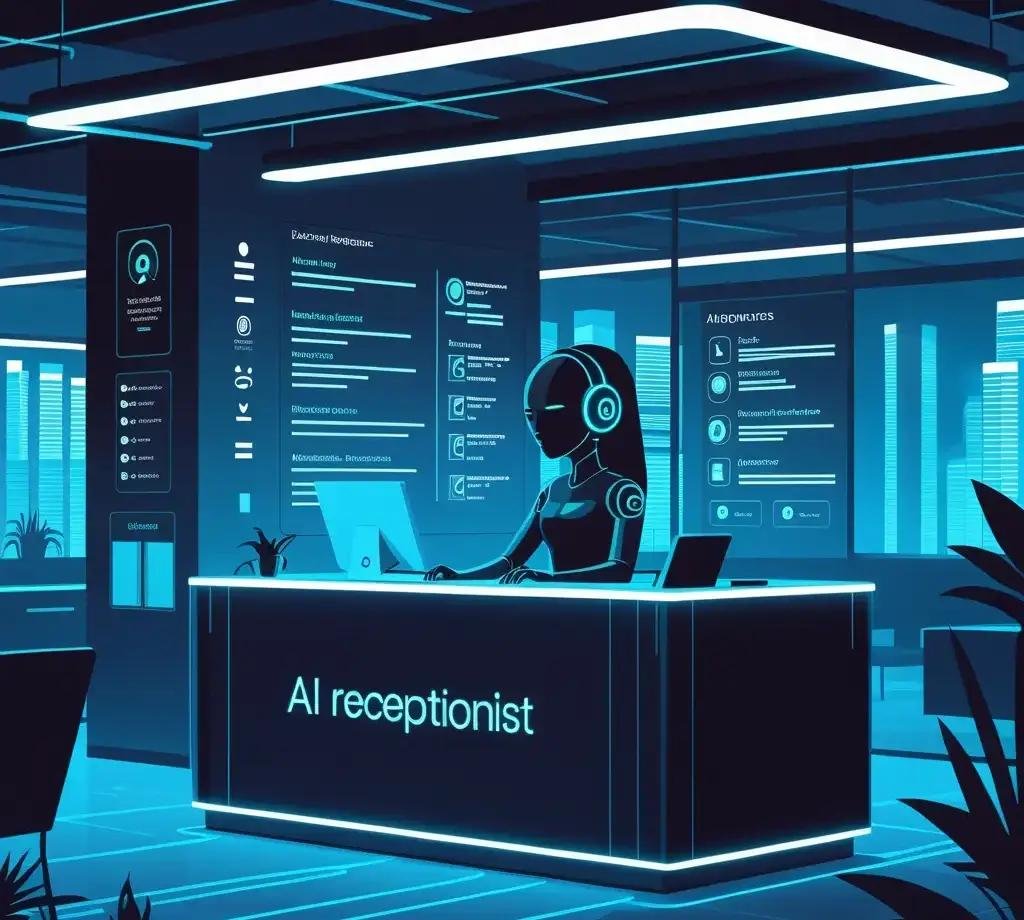
That question became the foundation for building an AI receptionist.
The Communication Problem
Home healthcare agencies operate in a unique environment.
Unlike traditional businesses, communication isn’t just about sales.
It’s about care.
Patients call with questions.
Families need updates.
Caregivers need support.
Referral partners need information.
Potential clients want to understand available services.
Every call matters.
The challenge is that agencies often receive these inquiries outside of normal business hours.
A family member may search for care options late at night.
A referral source may call during a busy period.
A prospective client may reach voicemail and never call back.
The result is lost opportunities and inconsistent customer experiences.
Looking Beyond Traditional Solutions
The obvious answer might seem simple.
Hire more staff.
But staffing isn’t always the best solution.
Additional employees increase overhead.
Training requires time.
Coverage gaps still exist.
And even the most dedicated receptionist can only handle one conversation at a time.
Instead of adding more people to the process, I wanted to improve the process itself.
That’s where AI entered the conversation.
Defining the Role
Before selecting software or building workflows, I started by defining exactly what the receptionist needed to do.
The goal wasn’t to replace people.
The goal was to handle repetitive communication tasks.
The AI needed to:
- Answer common questions
- Capture lead information
- Schedule consultations
- Route inquiries appropriately
- Provide consistent responses
- Operate outside business hours
These tasks represented a large percentage of incoming communication.
They were also highly structured.
Which made them ideal candidates for automation.
Building the Foundation
One of the biggest mistakes businesses make when implementing AI is focusing on technology first.
Technology should come second.
Process should come first.
Before building anything, we documented the agency’s communication flow.
What questions were most common?
What information needed to be collected?
When should a conversation be transferred to a human?
What information was required before scheduling an appointment?
Once those answers existed, building the system became much easier.
The AI wasn’t inventing a process.
It was following one.
Connecting the Systems
An AI receptionist becomes significantly more valuable when connected to existing business tools.
Rather than functioning as a standalone chatbot, the system was designed to integrate with operational workflows.
This included:
- Lead management systems
- Scheduling tools
- CRM platforms
- Internal communication channels
When a prospective client reached out, information could be collected automatically and passed directly into the appropriate workflow.
No duplicate data entry.
No lost notes.
No forgotten follow-ups.
The Biggest Surprise
The most interesting outcome wasn’t what we expected.
Initially, the goal was efficiency.
Reduce administrative workload.
Respond faster.
Capture more leads.
Those benefits happened.
But something else happened as well.
Consistency improved.
Every caller received the same quality of information.
Every inquiry followed the same process.
Every lead entered the system correctly.
Human teams naturally vary from person to person.
Technology helped create a more consistent experience.
What AI Did Not Replace
It’s important to understand what remained human.
The AI didn’t make care decisions.
It didn’t provide medical advice.
It didn’t replace relationships.
It didn’t replace empathy.
Healthcare is fundamentally a human profession.
Technology should support care, not replace it.
The system handled repetitive communication so staff could spend more time focusing on patients and families.
That’s where humans create the most value.
Lessons Learned
Building an AI receptionist taught me several important lessons.
Process Always Comes First
AI cannot fix a broken workflow.
If the process is unclear, automation simply spreads confusion faster.
Simplicity Wins
The most effective automations aren’t always the most advanced.
Often, solving a few high-frequency problems creates the biggest impact.
Human Escalation Matters
Every automation should have a clear path to a human when needed.
Customers should never feel trapped inside a system.
Trust Is Everything
Particularly in healthcare, communication must feel clear, professional, and trustworthy.
Technology should reduce friction, not create it.
The Future of Healthcare Communication
Healthcare agencies face increasing pressure.
Growing demand.
Administrative complexity.
Staff shortages.
Higher expectations from patients and families.
Technology alone won’t solve these challenges.
But it can remove unnecessary friction.
It can reduce repetitive work.
It can improve responsiveness.
It can help organizations focus more attention where it matters most: delivering care.
Final Thoughts
When people hear the term “AI receptionist,” they often imagine a futuristic robot replacing employees.
That’s not what I built.
What I built was a communication system.
A system designed to answer questions faster.
Capture information more accurately.
Support staff more effectively.
And provide a better experience for the people seeking care.
The lesson wasn’t that AI is powerful.
The lesson was that thoughtful systems are powerful.
AI simply helped those systems operate at scale.
And for organizations trying to do more with limited resources, that can make all the difference.