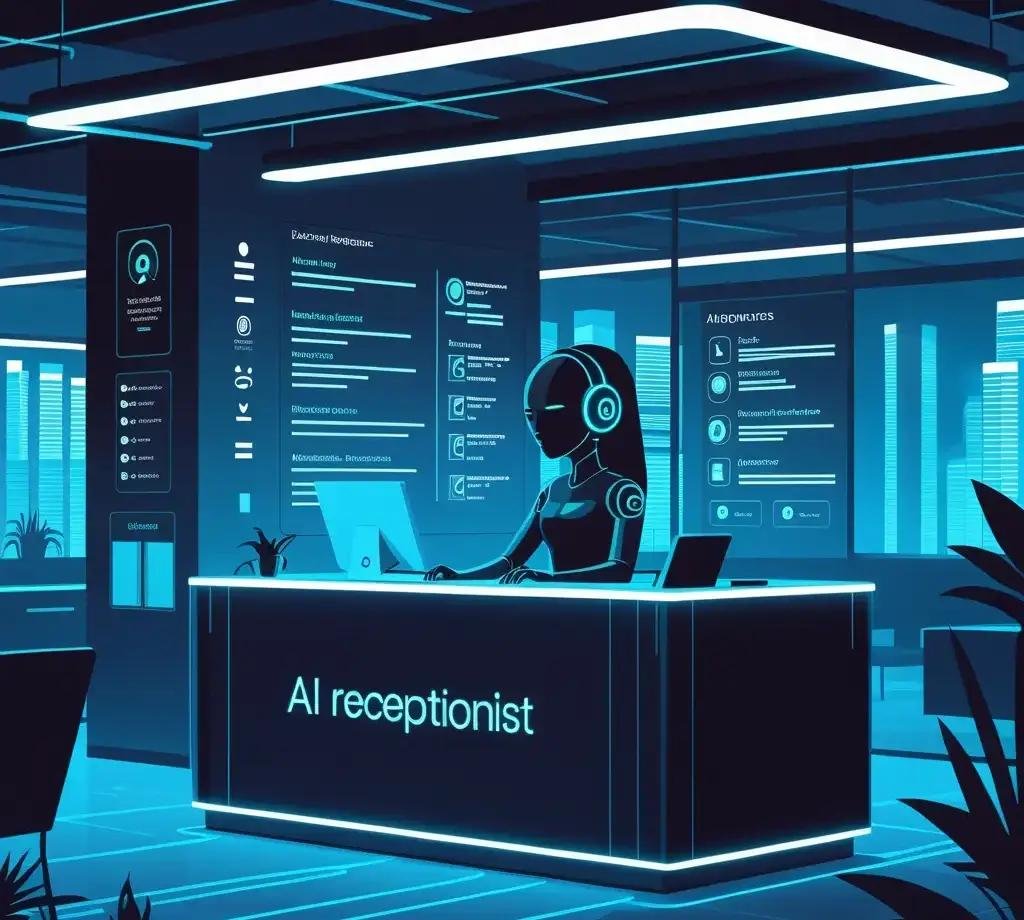
Imagine hiring an employee who never sleeps.
They answer every call.
They never take a vacation.
They never call in sick.
They never forget information.
They work nights, weekends, and holidays.
And they cost a fraction of a full-time employee.
A few years ago, that sounded impossible.
Today, it’s becoming one of the most practical applications of artificial intelligence for small and medium-sized businesses.
Welcome to the age of the AI receptionist.
The Hidden Cost of Missed Calls
Most business owners underestimate how much money they lose from missed communication.
A customer calls after hours.
Nobody answers.
They move on to a competitor.
A lead submits a form.
The response arrives two days later.
The prospect has already made a decision.
An existing customer has a simple question.
They can’t reach anyone.
Their confidence in the business drops.
These moments seem small individually.
Collectively, they represent thousands of dollars in lost opportunities every year.
The problem isn’t usually a lack of effort.
It’s capacity.
Most businesses simply don’t have someone available 24 hours a day to answer inquiries.
The Traditional Receptionist Model
For decades, businesses relied on receptionists to act as the first point of contact.
Their responsibilities included:
- Answering calls
- Routing inquiries
- Scheduling appointments
- Taking messages
- Providing basic information
- Handling customer questions
A great receptionist creates an excellent first impression.
But there are limitations.
Human receptionists work limited hours.
They require training.
They take time off.
They can only handle one conversation at a time.
As businesses grow, communication demands grow with them.
This is where AI begins to create value.
What Is an AI Receptionist?
An AI receptionist is an intelligent system designed to interact with customers through phone calls, text messages, websites, and messaging platforms.
Unlike traditional automated phone menus that frustrate users with endless button pressing, modern AI systems can understand natural language and hold real conversations.
A customer can say:
“I’d like to schedule an appointment.”
The AI understands the request.
Checks availability.
Collects information.
Books the appointment.
Confirms the details.
All without human intervention.
To the customer, the interaction feels natural.
To the business, the process becomes dramatically more efficient.
What AI Receptionists Do Best
While AI isn’t perfect, there are specific tasks where it performs exceptionally well.
Answering Frequently Asked Questions
Customers often ask the same questions repeatedly.
What are your hours?
Where are you located?
What services do you offer?
What is your pricing?
AI can answer these instantly.
Lead Qualification
Not every inquiry is a qualified lead.
AI can ask structured questions to determine:
- Budget
- Timeline
- Needs
- Location
- Service requirements
This allows sales teams to focus on opportunities with the highest likelihood of converting.
Appointment Scheduling
Scheduling consumes more time than many business owners realize.
AI can automatically:
- Check availability
- Schedule appointments
- Send confirmations
- Deliver reminders
- Handle rescheduling requests
Call Routing
Some conversations still require human expertise.
AI can identify the purpose of the call and route customers to the appropriate department.
Why Small Businesses Benefit the Most
Large corporations often have dedicated call centers.
Small businesses don’t.
A missed call for a large company may be insignificant.
A missed call for a small business could mean losing a valuable client.
This is why AI receptionists create such a significant impact for smaller organizations.
They provide enterprise-level communication capabilities without enterprise-level costs.
Common Misconceptions
“Customers Want to Talk to Humans”
Sometimes.
But often customers simply want answers.
If someone needs your office hours at 10 PM, they aren’t looking for a deep conversation.
They’re looking for information.
Fast.
Conveniently.
Accurately.
“AI Replaces Employees”
The best implementations don’t replace employees.
They support them.
Instead of spending hours answering repetitive questions, staff can focus on higher-value activities.
Relationship building.
Problem solving.
Sales.
Customer care.
“AI Is Too Expensive”
This may have been true several years ago.
Today, implementation costs are falling rapidly while capabilities continue improving.
For many businesses, AI receptionists generate a return on investment within months.
Industries Seeing Strong Results
AI receptionists are becoming particularly effective in:
- Home healthcare
- Medical practices
- Law firms
- Real estate agencies
- Construction companies
- Marketing agencies
- Accounting firms
- Service businesses
These industries often receive repetitive inquiries that follow predictable patterns.
This makes them ideal candidates for automation.
What Makes an AI Receptionist Successful?
Technology alone isn’t enough.
The most effective AI systems are built around clear business processes.
Successful implementations include:
- Accurate business information
- Defined workflows
- CRM integration
- Appointment scheduling systems
- Human escalation paths
- Regular updates and optimization
The AI should function as an extension of the business, not as a disconnected piece of software.
The Future of Business Communication
The companies gaining a competitive advantage today aren’t necessarily hiring more employees.
They’re becoming more responsive.
More available.
More efficient.
Customers increasingly expect immediate answers.
Immediate responses.
Immediate service.
AI receptionists help businesses meet those expectations without dramatically increasing overhead.
Final Thoughts
Every business owner faces the same challenge:
There are only so many hours in a day.
You can’t answer every call.
You can’t respond to every message instantly.
You can’t be available 24 hours a day.
But your business can.
That’s the real opportunity.
AI receptionists aren’t about replacing people.
They’re about ensuring customers never feel ignored.
And in a world where attention is scarce and competition is everywhere, that can make all the difference.
The businesses that embrace intelligent communication systems today will be the ones creating better customer experiences tomorrow.