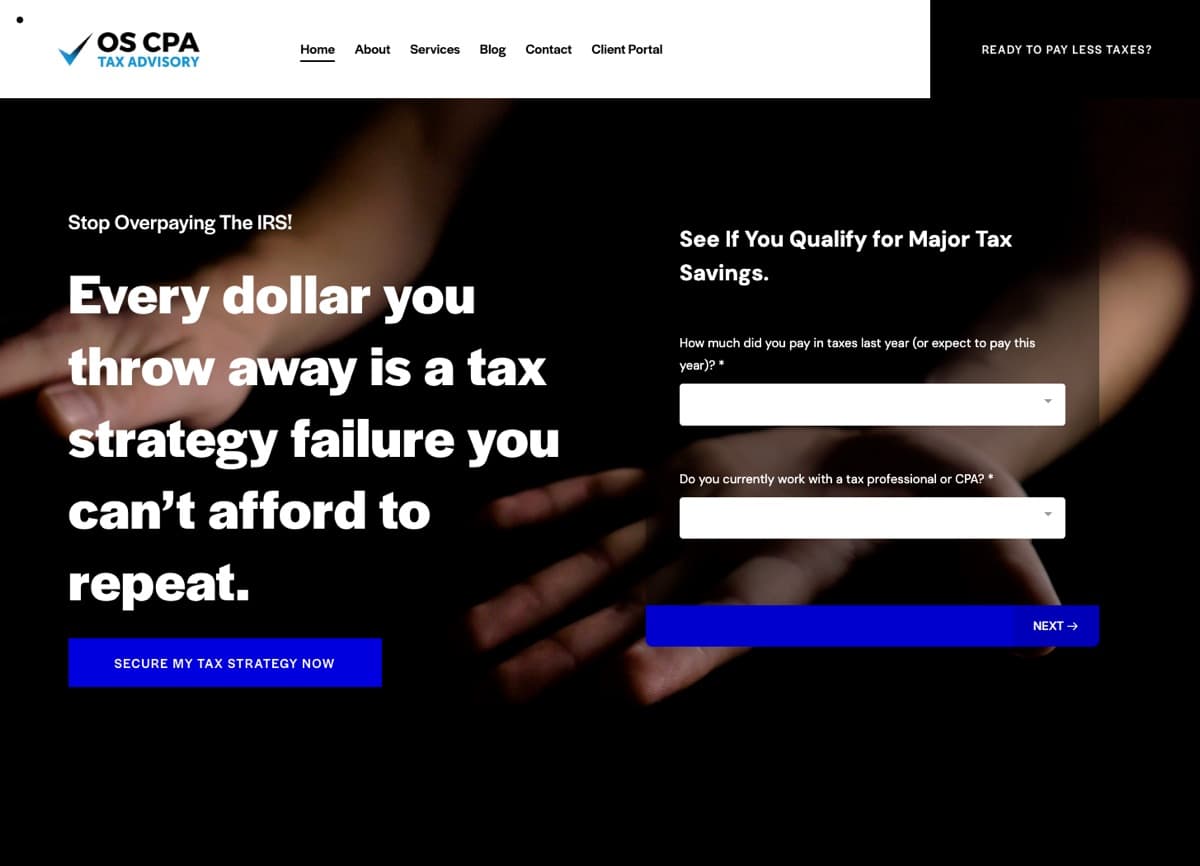
If you run a home health or home care agency, you have probably asked three people what a new website costs and heard three answers that don’t line up: a few hundred dollars a year, “about ten thousand,” and a number with too many zeros. None of them is necessarily wrong. They are pricing different things.
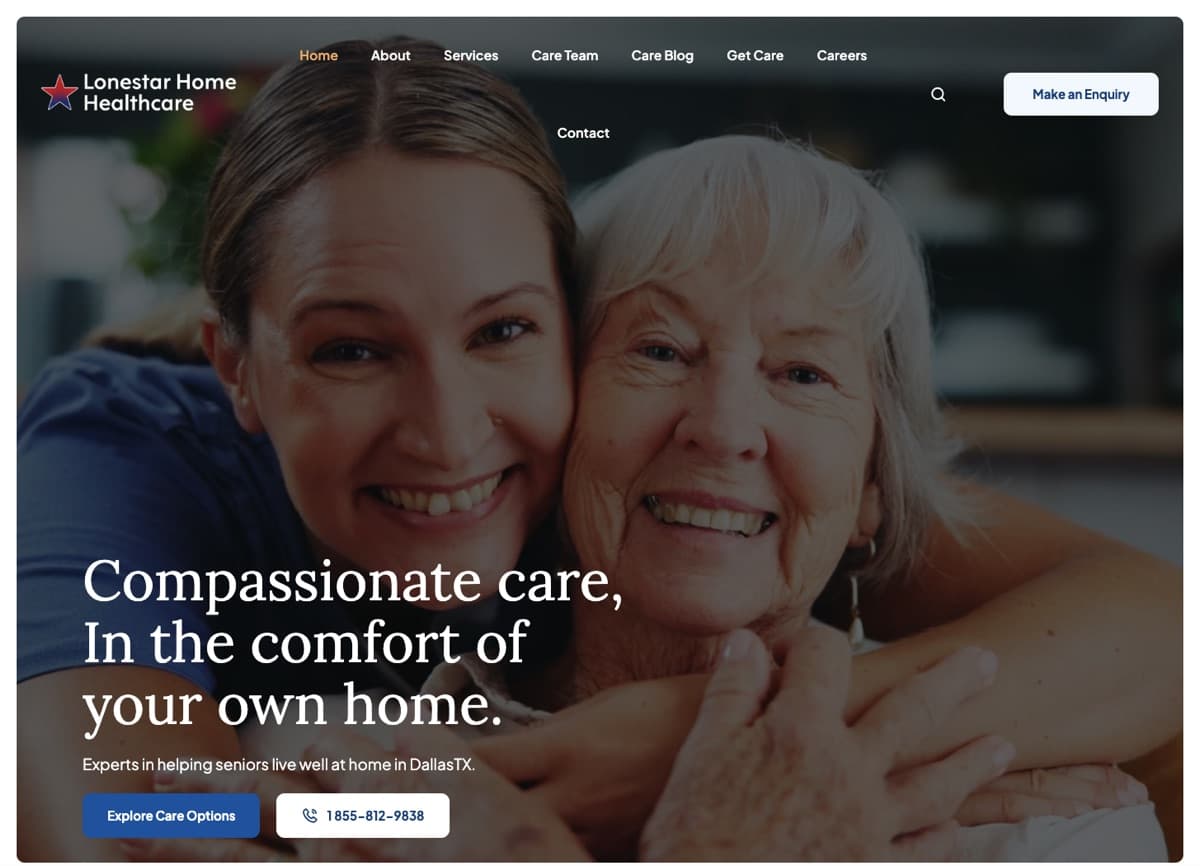
The short answer: in 2026, published pricing guides put a template or builder site in the low thousands or less, a custom-designed site on a content management system (CMS) somewhere around $8,000 to $30,000, and a custom build with a portal or software integrations at $30,000 and up. Ongoing costs matter as much as the build. I have designed and built sites for home healthcare agencies, including Epic Home Healthcare and Lonestar Home Healthcare, and this is how I would help an owner set a realistic budget.
The three tiers, and what each one really buys
Template or website builder
This is a site built on a builder such as Squarespace or Wix, or a pre-made WordPress theme. If you do it yourself, the builder plan is often in the range of roughly $200 to $600 a year including hosting, according to 2026 small business pricing guides. If you pay someone to set up and customize a template, guides commonly put that at around $2,000 to $8,000.
You get a clean, presentable site quickly. You don’t get much strategy, and anything the template wasn’t designed for (a proper caregiver application flow, dozens of service-area pages) tends to become a workaround.
Custom-designed site on a CMS
This is where most established agencies land. The site is designed around your services, your market and your hiring needs, then built on a CMS your office can edit. Healthcare-focused pricing guides published this year place professional-tier builds at roughly $8,000 to $30,000, depending on page count, content, and how much copywriting and photography is included.
Custom build with a portal or integrations
Once the website stops being a brochure and starts doing operational work (connecting to your scheduling or EMR system, running a logged-in portal for families or referral partners, powering an AI intake assistant), you are building software. Guides generally put this at $30,000 to $100,000 or more. At this tier the website and your agency software start to overlap, which I cover in my guide to home healthcare agency software.
What a home health site needs that a generic small business site doesn’t
This is the part most cheap quotes miss. A home health website has two audiences who both matter: families looking for care and caregivers looking for work. Often it has a third, referral partners. A generic “home, about, services, contact” template serves none of them particularly well.
- A caregiver recruiting funnel: a careers section that explains pay structure, shifts and service areas, with a short mobile-friendly application. For many agencies, hiring is the real bottleneck, and the website is a recruiting tool first.
- A referral-partner page: discharge planners, case managers and physician offices need to know what you accept, where you serve and how to send a referral quickly.
- HIPAA-aware forms: intake and referral forms can collect health information. Where that data goes, who can see it, and whether the vendors involved will sign a Business Associate Agreement all need deliberate decisions, not defaults.
- Service-area pages: useful, specific pages for the cities and counties you actually serve, which is how families find a local agency in search.
- Accessibility: many of your visitors are older adults or people with disabilities, and for some agencies there are also regulatory requirements (more on that below).
For a full list of what I check on these sites, see my home care agency website checklist.
A word on accessibility deadlines
HHS’s Section 504 rule requires recipients of HHS federal financial assistance to make their web content conform to WCAG 2.1 Level AA. In May 2026, HHS issued an interim final rule pushing the compliance dates back one year: to May 11, 2027 for recipients with 15 or more employees, and May 10, 2028 for smaller ones, as published in the Federal Register. Whether your agency counts as a recipient is a question for your compliance advisor, but building accessibly from the start costs far less than retrofitting later.
A word on forms and HIPAA
If your agency is a HIPAA covered entity, any vendor that receives, stores or transmits protected health information on your behalf is generally a business associate and needs a written agreement. The HHS guidance on business associates explains the basics. In practice, this affects which form tools, hosting and email services you can use for intake, and it can add cost. I go into detail in what a HIPAA-compliant website means for a home health agency.
Ongoing costs: the part of the budget people forget
A website is not a one-time purchase. One 2026 pricing study estimates that ongoing expenses typically run 15 to 30 percent of the build cost each year. Here is what that usually covers:
- Domain: a small annual fee, and it should be registered in your agency’s name.
- Hosting: anywhere from bundled in a builder plan to a few hundred dollars a year for managed hosting. HIPAA-eligible hosting or form services, if you need them, usually cost more.
- Maintenance or care plans: updates, backups, security monitoring and small edits. Basic plans in small business guides start around $50 a month, while healthcare-focused guides cite roughly $300 to $700 a month for more complete coverage.
- SEO: local SEO retainers are commonly quoted at about $750 to $2,500 a month. Not every agency needs a retainer, but someone has to maintain your Google Business Profile, service-area pages and site health.
- Content: job postings, new service pages, photos and the occasional article. This can be staff time or a paid writer.
Site speed also counts here. A slow site quietly costs you applicants and inquiries, particularly on phones. I explain what to watch in Core Web Vitals explained for business owners.
A year-one budget example
To make this concrete, here is an illustrative year-one budget for a single-location agency choosing a custom-designed CMS site. These are example ranges based on the 2026 guides mentioned above, not a quote.
| Line item | Example range (year one) | Notes |
|---|---|---|
| Design and build | $8,000 to $30,000 | Custom design on a CMS, including careers and referral pages |
| Domain | Under $50 | Registered to the agency, not the vendor |
| Hosting | $0 to $600 | More if you need HIPAA-eligible hosting or forms |
| Maintenance or care plan | $600 to $8,400 | Roughly $50 to $700 a month depending on coverage |
| Local SEO (optional) | $0 to $30,000 | From in-house effort to a $750 to $2,500 monthly retainer |
| Content and photography | $0 to $5,000 | Real photos of your team beat stock images |
The spread is wide on purpose. The biggest swing is usually SEO and content, not the build itself. An agency that already has a marketing lead in-house can spend much less than one that outsources everything.
WordPress, Next.js or Webflow for an agency?
The platform affects both the build price and what you pay to keep it running. Briefly:
- WordPress is familiar, flexible and has a huge ecosystem. The trade-off is ongoing plugin and security maintenance, which is exactly what care plans pay for.
- Webflow gives your staff a visual editor with hosting included, which suits agencies that want to update pages without a developer.
- Next.js is a code framework I use for sites that need to be very fast or connect to other systems, such as scheduling, intake or a portal. It usually costs more upfront and needs a developer relationship.
There is no single right answer. I compare them in detail in Next.js vs WordPress vs Webflow vs Framer.
What drives the price up
If a quote comes back higher than you expected, it is usually one of these:
- EMR, scheduling or EVV integrations: sending website intake or applications straight into your agency software means working with that vendor’s API (if one exists), mapping data carefully and testing it. This is real software work.
- Bilingual or multilingual content: many agencies serve Spanish-speaking families and caregivers. Doing it properly means translated pages, not a translation widget, and every page you add doubles in upkeep.
- AI intake or an AI receptionist: a chat or phone assistant that answers questions and captures inquiries after hours. I wrote about the design decisions in how I built an AI receptionist for a home healthcare agency.
- A custom portal: logins for families, caregivers or referral partners bring authentication, permissions, audit trails and privacy obligations.
- Volume of content: twenty well-written service-area pages take real research and writing time.
Red flags in a website quote
A low price is not a red flag on its own. These are:
- The vendor owns your domain. Your domain should be registered in your agency’s name, with you holding the login.
- You don’t own the code or content. Read the contract. If you leave, can you take the site with you, or only rent it?
- No access to your own analytics. You should be an administrator on your Google Analytics property, not a guest on the vendor’s. Google’s help page on managing Analytics users shows what that access looks like.
- Long lock-in contracts. Multi-year agreements where the site disappears if you stop paying are common in healthcare marketing packages. Know the exit terms before you sign.
- “HIPAA compliant” with no BAA. A vendor that claims to be HIPAA compliant but won’t sign a Business Associate Agreement for services that handle protected health information is telling you something important.
- No mention of recruiting or accessibility. A proposal that could have been written for a dentist or a plumber probably was.
How to budget sensibly
In my experience, the agencies that get the most from a website decide first what the site has to do: fill caregiver shifts, win referrals, or reach families in new areas. Then they pay for that and nothing more. Start with a well-built site that does those jobs, own every account, and add integrations or a portal when the operational need is clear rather than because they were in a package.
Frequently asked questions
How much does a home health agency website cost in 2026?
Published 2026 pricing guides suggest a template or builder site ranges from a few hundred dollars a year (do it yourself) to around $2,000 to $8,000 professionally set up. A custom-designed CMS site commonly runs $8,000 to $30,000, and custom builds with portals or integrations start around $30,000. Actual quotes vary by region, scope and provider.
How much does home care website maintenance cost per month?
Basic maintenance plans in small business pricing guides start around $50 a month, while healthcare-focused guides cite roughly $300 to $700 a month for fuller coverage such as security updates, backups, monitoring and content edits. Hosting, SEO and HIPAA-eligible services may be billed separately, so check what a plan actually includes.
Can I use Wix or Squarespace for a home health agency website?
Yes, for a simple informational site. The limits show up with caregiver application flows, many service-area pages, and intake forms that collect health information, since you need form and hosting vendors willing to sign a BAA where HIPAA applies. Check that with your compliance advisor before you put intake forms on any builder.
Does a home health website need to be HIPAA compliant?
A brochure page with no health information is not the issue. Forms, chat tools and portals that collect protected health information for a covered entity are, and the vendors involved generally need Business Associate Agreements. Whether HIPAA applies to your agency depends on how you bill, so confirm with your compliance officer or attorney.
Why do healthcare websites cost more than regular small business sites?
Mostly because they do more jobs. A home health site serves families, caregiver applicants and referral partners, handles sensitive form data, needs strong accessibility, and often has many service-area pages. Integrations with agency software and bilingual content add further work. The design itself is rarely what makes it expensive.
Want a second opinion on a quote?
If you have a proposal in hand and aren’t sure whether it is fair, or you are planning a new site and want to scope it properly, I’m happy to take a look. You can see agency sites I have built in my portfolio, or send me what you have and I’ll give you an honest read, even if the answer is that your current site just needs a few fixes.