Most home health agencies don’t have a lead problem. They have a referral problem. A case manager sends a patient, nobody calls back for three hours, the patient goes to the agency that answered first, and the case manager quietly stops sending. Multiply that by a few hospitals and a few physician offices and you have a growth problem that no amount of brochures will fix.
The short answer: home health referral marketing works when you make it easy and safe to refer to you. That means a clear referral page and secure intake on your website, a fast and predictable response time, status updates back to the person who referred, and liaisons who track relationships in a CRM, all inside the federal rules on kickbacks, patient choice and privacy. Here is the plan I would put in place.
For context, I’m a Solutions Architect at Lonestar Home Healthcare, I built the Lonestar and Epic Home Healthcare websites, and I helped build Pinn.Care, an ERP for home healthcare agencies.
Who actually refers to a home health agency
Before any tactics, get clear on who you are marketing to. Each referral source has a different job and a different reason to pick you.
- Hospital case managers and discharge planners: they need to get patients home safely and on time, and they remember which agencies made that easier.
- Physicians and their office staff: the physician (or allowed practitioner) certifies the need for home health and signs the plan of care. In practice the medical assistant or office manager is often the person you deal with.
- Skilled nursing facilities and rehab units: they discharge patients who still need skilled care at home, and they care about readmissions.
- Assisted living and independent living communities: they want an agency that shows up reliably and communicates with their staff.
- Families and patients: they search online, compare options from the hospital, or ask for you by name.
What referral sources need from you
Referral sources don’t need a clever pitch. They need three things:
- Fast acceptance or decline. A clear yes or no, quickly, so they can move on. A slow “let me check” is worse than a fast no.
- Clarity on fit. Your service area by county or ZIP code, the insurance you accept, the disciplines you staff (skilled nursing, PT, OT, speech, aides), and anything you can’t take. If they have to call to find this out, you lose the easy referrals.
- Status updates. Confirmation that you received the referral, when the start of care is scheduled, and whether it happened. Closing the loop is how you earn the next one.
The rules that shape referral marketing
Home health marketing ideas that work in other industries can be illegal here. These are the rules I keep in front of any agency plan.
The Anti-Kickback Statute
The HHS Office of Inspector General describes the federal Anti-Kickback Statute as a criminal law that prohibits knowingly and willfully paying “remuneration” to induce or reward patient referrals or the generation of business involving federal health care programs. Remuneration means anything of value, not just cash. OIG puts it plainly: in the federal health care programs, paying for referrals is a crime. Penalties include fines, prison time and civil monetary penalties.
That rules out per-referral payments to anyone, “marketing fees” tied to volume, and perks for a case manager who sends patients your way.
Stark basics
The physician self-referral law, usually called Stark, prohibits a physician from referring Medicare or Medicaid patients for “designated health services” to an entity the physician (or an immediate family member) has a financial relationship with, unless an exception applies. Home health services are on the designated health services list, and OIG notes that Stark is strict liability, so intent doesn’t matter. Any physician ownership, medical director role or compensation arrangement needs to fit an exception, reviewed by counsel.
Patient choice in hospital discharge planning
Under the hospital discharge planning rule at 42 CFR 482.43, when home health is indicated and appropriate, the hospital must give the patient a list of available HHAs that serve the geographic area (as defined by the HHA) where the patient lives. The hospital must respect the patient’s preferences, must not limit the qualified providers available to them, and must disclose any HHA in which it has a financial interest. The rule also says hospitals must help patients choose by using and sharing data that includes HHA quality measures.
Two practical takeaways. First, make sure your service area is defined and current, because it decides whether you belong on that list. Second, the patient and family are the final decision makers, so your public reputation and your website matter at the moment of choice.
Care Compare star ratings and HHCAHPS
The quality data referral sources and families see is mostly on Medicare’s Care Compare. CMS publishes two home health star ratings: a Quality of Patient Care rating based on OASIS and claims data, and a Patient Survey rating based on the Home Health CAHPS (HHCAHPS) survey. Both are updated quarterly. The quality rating includes timely initiation of care, which is one more reason fast intake matters beyond the relationship itself.
You can’t market your way to good stars, but you can know your numbers and talk about them honestly when a discharge planner asks.
The digital side of home health referral marketing
This is where most agencies leave referrals on the table: a liaison builds a great relationship, then the case manager hits a generic contact form and a phone line that goes to voicemail after five.
1. Build a referral partner page
Give referral sources their own page, linked from the main navigation (I usually label it “Refer a Patient”). It should answer, at a glance:
- Service area, listed by county and major cities or ZIP codes.
- Services and disciplines, including what you don’t provide.
- Insurance and payers accepted.
- How to refer: secure online form, fax number, phone line and hours.
- What happens next and how quickly you respond.
- A named intake contact or team, with a direct number.
My home care agency website checklist covers the rest of what the site should include.
2. Use a secure referral form behind a BAA
A referral form collects protected health information, so it has to be handled like PHI. That means an encrypted connection, a form and storage vendor that will sign a Business Associate Agreement, access limited to intake staff, and no copies sitting in a regular inbox. Most standard website form plugins and email notifications don’t meet that bar out of the box. I wrote a separate guide on what a HIPAA compliant website for a home health agency needs, including which pieces require a BAA.
Keep the form short: enough to make an accept or decline decision, with an option to attach documents instead of retyping them.
3. Keep e-fax and portal intake in the same queue
Many hospitals still refer by fax or portal. What matters is that every channel (web form, e-fax, portal, phone) lands in one intake queue with a timestamp. If intake has to check four places, something will sit.
4. Set a response-time SLA and publish it
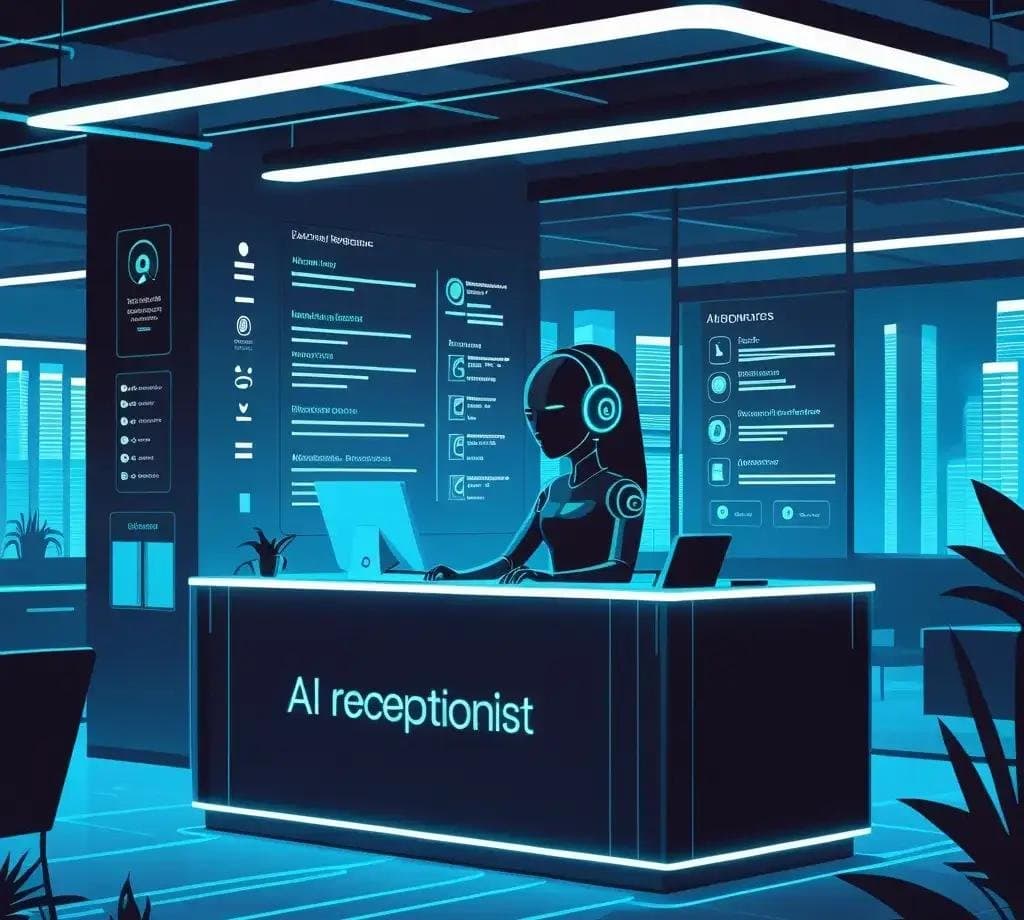
Pick a target you can actually hit, such as acknowledging every referral within a set window during business hours, and a clear accept or decline decision within a set window after that. Put it on the referral page. Then measure it. If referrals arrive after hours, you need a plan for those too; I covered options in how to handle after-hours calls for a home care agency, and I also wrote about building an AI receptionist for a home healthcare agency to catch calls that would otherwise hit voicemail.
5. Send updates back to the referrer
Close the loop at three moments: received, accepted (with the scheduled start of care), and start of care completed, or declined with a reason. Sharing this information with the referring provider is part of coordinating the patient’s care. HHS guidance notes that the HIPAA minimum necessary standard doesn’t apply to disclosures to a health care provider for treatment, and treatment includes coordination of care and referrals. Even so, send updates through a secure channel, and keep them focused on what the referrer needs.
The relationship side: liaisons and a CRM
Digital intake handles speed; liaisons handle trust. Good liaisons are useful, not pushy: they learn how each unit works, bring answers about service area and payers, and fix problems quickly when a start of care slips.
A CRM makes that repeatable. At a minimum it should hold:
- Every referral source as an organization, with the individual contacts inside it.
- Each liaison visit, call and in-service, with notes and next steps.
- Referrals linked back to the source and contact who sent them.
- Follow-up tasks so no relationship goes quiet by accident.
Whether you need a separate CRM or can get by in your EMR’s intake module depends on your size and how many liaisons you run. I compared both in home health CRM vs EMR, and the home healthcare agency software guide covers how the pieces fit together. If the CRM will hold any patient information, it needs a BAA.
Measuring your referral sources
If you only count referrals, you will over-invest in sources that send patients you can’t admit. Track the whole path, by source and by liaison.
| Metric | What it tells you |
|---|---|
| Referrals received | Volume by source, contact and liaison. |
| Admissions | Which referrals turned into patients on service. |
| Referral-to-admission conversion | Whether a source sends patients who fit your area, payers and staffing. |
| Time to first response | Whether intake is meeting the SLA you published. |
| Time to start of care | How long from referral to first visit, which referral sources notice and CMS measures. |
| Non-admit reasons | Why referrals didn’t convert: out of area, payer, staffing, patient declined. |
Review these monthly with intake and liaisons together. Non-admit reasons tell you whether to fix staffing, adjust your service area, add a payer, or explain more clearly what you can take.
What not to do
Some home health marketing ideas you’ll hear elsewhere can put your agency at risk.
Don’t pay for referrals in any form
No per-referral fees, no volume-based bonuses to outside parties, no free staff or supplies for a facility in exchange for patients. If a lead vendor is paid by how many patients they send, get legal advice before signing.
Be careful with gifts, lunches and perks
There is no general “small gift” safe harbor for referral sources under the Anti-Kickback Statute. The figures people often quote come from other rules. OIG’s policy statement on gifts of nominal value sets $15 per item and $75 per patient per year, but it applies to gifts to Medicare and Medicaid beneficiaries, not to case managers or physicians. Stark has a separate non-monetary compensation exception for physicians with an annual cap that CMS adjusts every year ($535 for 2026), and it comes with its own conditions. Neither makes a gift automatically safe under the Anti-Kickback Statute. Many hospitals also have their own policies that bar staff from accepting gifts at all. Write a gift and meals policy with your compliance officer, log what you give, and never tie anything to referrals.
Don’t put PHI in email marketing
Keep patient information out of newsletters, mass email tools, ad platforms and marketing analytics. Referral partner newsletters with service updates are fine; patient stories and testimonials need written authorization. HHS explains that using PHI for marketing generally requires the patient’s authorization. And a “quick update” about a specific patient sent from a liaison’s personal phone or regular email is a privacy incident waiting to happen.
Don’t pressure the patient’s choice
Hospitals must respect patient choice, so don’t ask a case manager to steer patients to you or to leave competitors off the list. Earn the choice with speed, service and your quality ratings instead.
Frequently asked questions
How do home health agencies get referrals?
Mostly from hospital case managers, physicians, skilled nursing facilities, assisted living communities and families. Agencies earn them by being easy to refer to: a clear service area and payer list, secure intake, a fast accept or decline, and status updates back to the referrer.
Can a home health agency give gifts to referral sources?
Be very careful. Under the Anti-Kickback Statute, anything of value given to induce or reward referrals can be a crime, and the OIG’s nominal value figures apply to beneficiaries, not referral sources. Set a written policy with your compliance officer.
Can a hospital recommend a specific home health agency?
Under 42 CFR 482.43, the hospital must give eligible patients a list of HHAs serving their area, respect their preferences, not limit their options, and disclose any HHA it has a financial interest in. The patient decides.
Does a home health referral form need to be HIPAA compliant?
Yes. It collects protected health information, so the form, storage and notifications need to be secure, and vendors handling that data should sign a Business Associate Agreement.
What metrics should I track for referral marketing?
Referrals, admissions and conversion by source and liaison, plus time to first response, time to start of care and non-admit reasons. Rank sources by admissions, not raw volume.
Want help making referrals easier?
If your referral page, intake form or follow-up process is the weak link, I’m happy to look at how referrals actually reach your agency and suggest what to fix first. Tell me about your agency and how referrals come in today.